

Where Europe’s Startup and Scaleup Talent Is Based, How Experienced They Are, and How They Move Between Companies
Updated: October 2026
This report analyses a talent pool of approximately 51,000 professionals currently working in VC-backed companies across Europe, primarily spanning Pre-Seed through Series C organisations. The analysis provides insight into where start-up talent is located, how experienced it is, where it comes from, what functions it performs, and the educational and linguistic attributes that shape Europe’s innovation economy.Overview
Europe’s VC-backed talent market is concentrated in a handful of major technology hubs, led by London, Paris and Berlin. The workforce is notably experienced, averaging 12.8 years of professional experience, while remaining relatively mobile with average tenure of 2.7 years. Software, engineering, SaaS and AI dominate the market, creating strong competition for technical talent. For employers, this means success increasingly depends on accessing talent beyond traditional hiring locations, considering adjacent industries, and targeting professionals from both startup and enterprise backgrounds.Key Findings at a Glance
- London remains Europe’s dominant VC-backed talent hub
- The average professional has nearly 13 years of experience.
- Software Engineering is the largest functional talent pool by a significant margin.
- Software, SaaS and AI businesses employ most VC-backed professionals.
- Talent frequently moves between startups and large technology consultancies.
- Leadership representation is strong, with significant Manager, Director and C-Suite populations.
- English is the dominant business language, but multilingual capability is widespread.
- Most professionals hold university degrees, with Bachelor’s and Master’s qualifications heavily represented.
- Competition for experienced technical talent remains intense across major hubs.
- Employers willing to recruit from secondary locations can access larger talent pools at more sustainable salary levels.
Talent Hubs
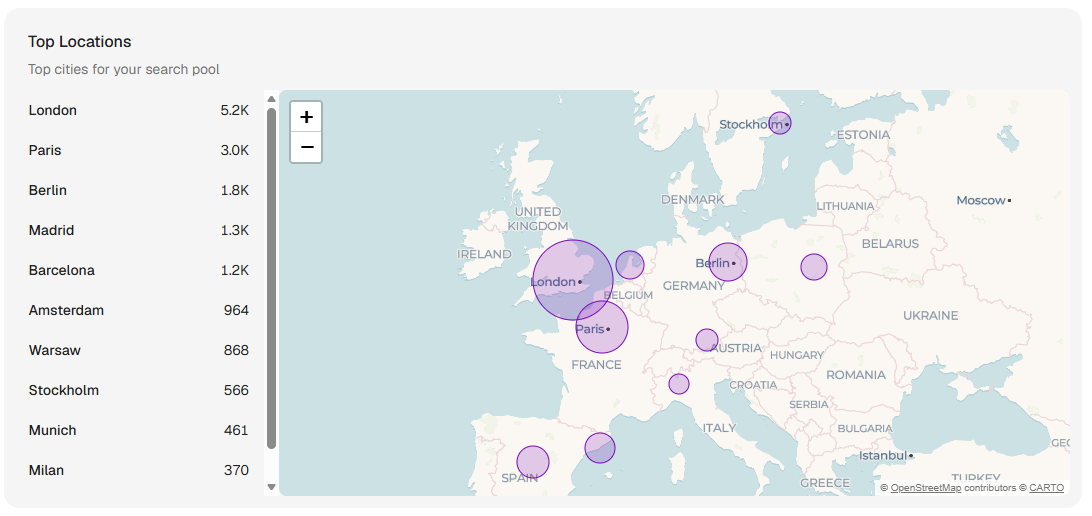
The European VC-backed workforce remains heavily concentrated in a small number of innovation centres. London leads decisively with 5,200 professionals, followed by Paris (3,000) and Berlin (1,800). Madrid, Barcelona, Amsterdam and Warsaw have emerged as significant secondary hubs, reflecting the growing maturity of regional startup ecosystems.
For employers struggling to hire in highly competitive markets such as London or Berlin, cities including Warsaw, Madrid and Barcelona present attractive alternatives where high-quality talent can often be secured more quickly and at lower cost. The data also highlights the increasingly distributed nature of European startup talent, reducing the need to focus exclusively on traditional technology centres.
Experience & Tenure
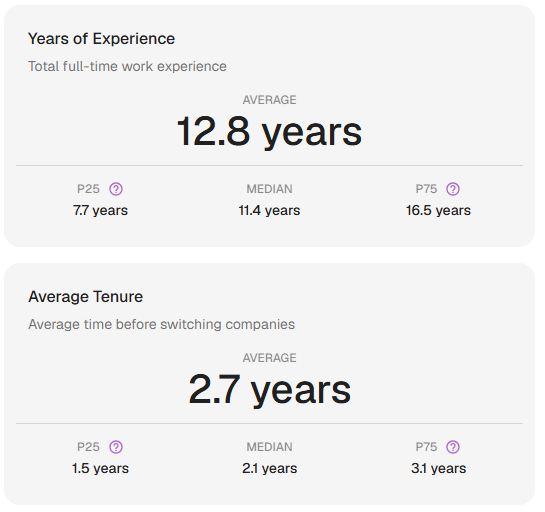
The average professional within Europe’s VC-backed sector brings 12.8 years of experience, with a median of 11.4 years. This is not a predominantly junior talent market; it is made up largely of experienced professionals capable of scaling businesses through growth phases.
Average tenure stands at 2.7 years, with a median of 2.1 years. This suggests healthy mobility but not instability. Professionals are typically staying long enough to deliver impact while remaining open to new opportunities. Employers offering meaningful career progression and equity-based incentives are likely to be successful in attracting this audience.
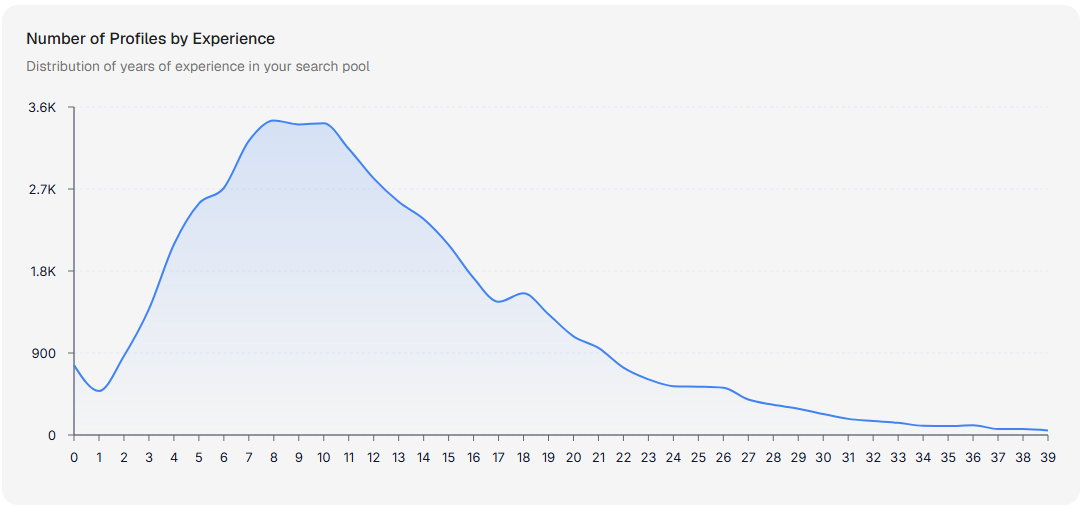
The experience curve peaks between seven and twelve years, indicating the market is dominated by mid-career and senior-level professionals rather than graduates or very senior executives. This is often the sweet spot for scaling companies because these individuals combine specialist expertise with operational delivery capability.
The most common skills reinforce this finding. Management, project management, communication, leadership, SQL and JavaScript feature prominently, reflecting a workforce that combines technical capability with commercial and operational expertise.
Employers
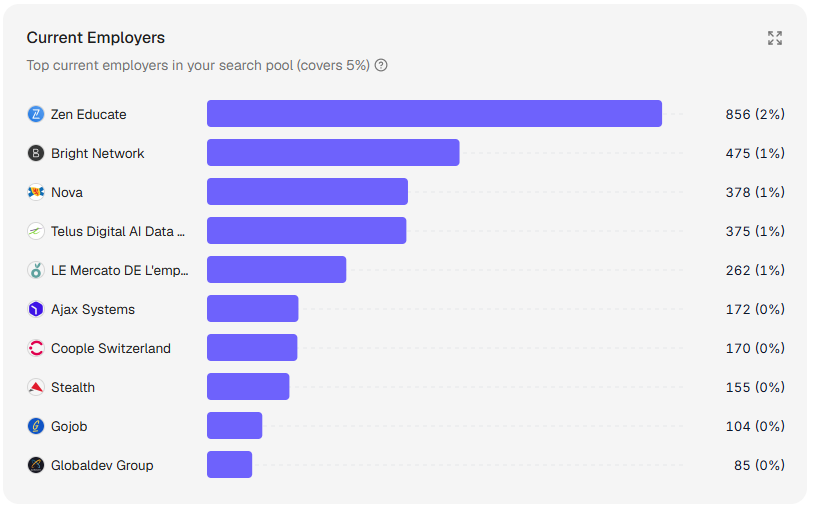 Current employers are spread across a wide range of VC-backed firms, indicating a highly fragmented talent landscape. No single company dominates, meaning competition for talent occurs between thousands of growth-stage businesses rather than a small group of employers.
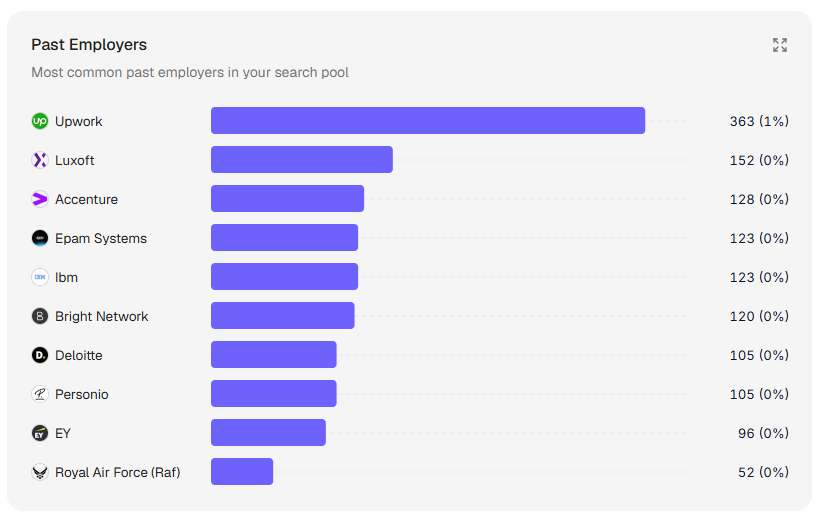 The past employer data provides one of the report’s most important recruitment insights. Organisations such as Accenture, IBM, EPAM, Luxoft, Deloitte and EY appear frequently, demonstrating that much of Europe’s startup workforce has originated from consulting, technology services and enterprise environments.
For hiring managers, this creates a significant opportunity. When startup talent is scarce, adjacent talent pools from technology consulting, professional services and enterprise software businesses can provide highly relevant candidates with transferable skills and experience.
Leadership & Functions
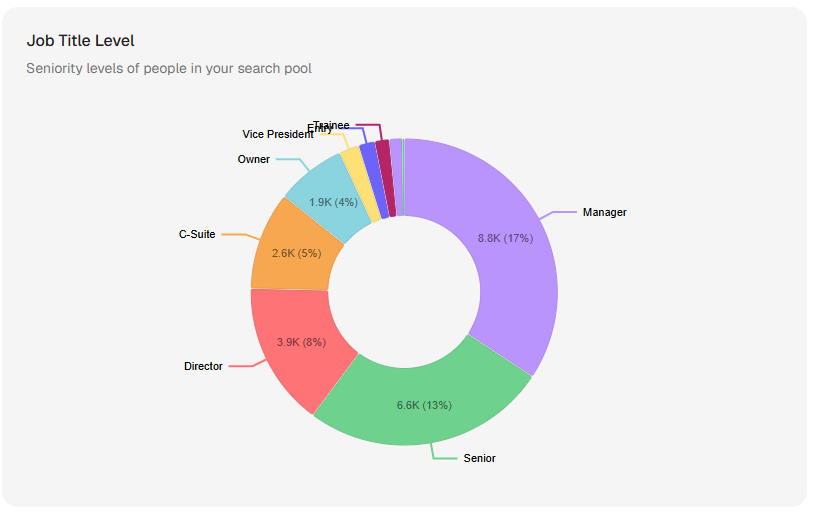 The workforce contains strong leadership representation. Managers account for 17% of the market, seniors 13%, directors 8%, and C-Suite professionals 5%. This indicates a meaningful population of decision-makers and experienced leaders rather than purely individual contributors.
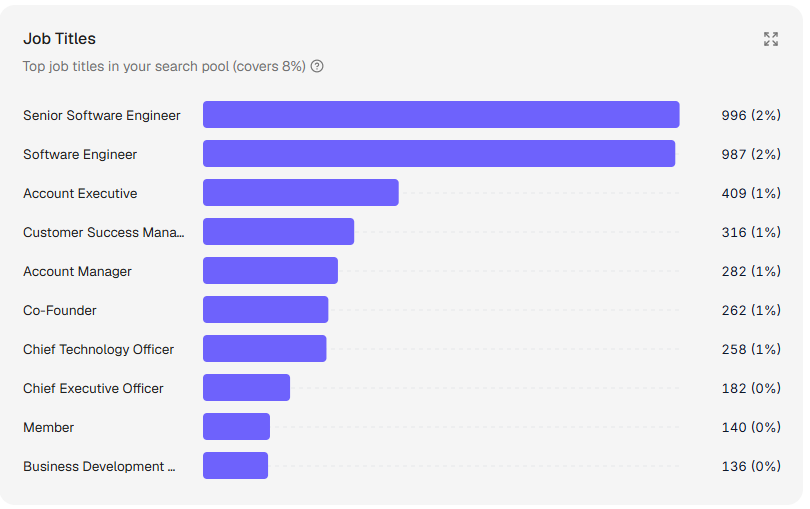 Software Engineer and Senior Software Engineer are the most common titles, highlighting the continued dominance of technology hiring across the VC ecosystem. The presence of CEOs, CTOs and founders among the most common roles further reinforces the entrepreneurial nature of the talent pool.
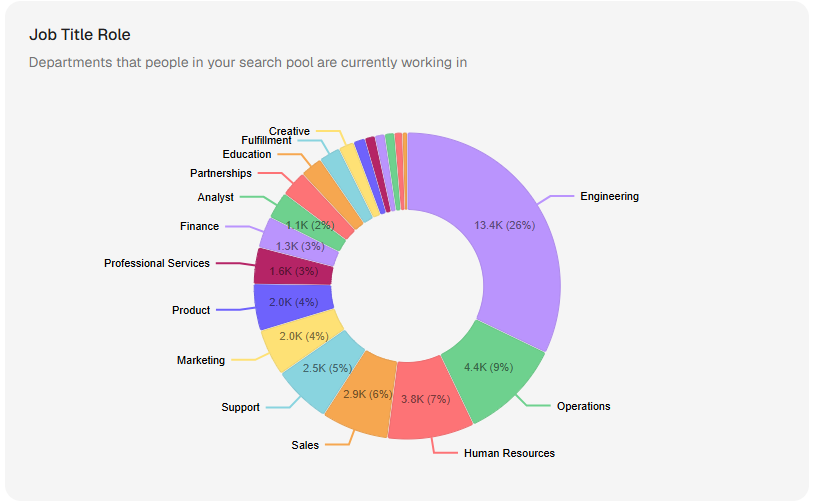 Software Engineering represents 26% of all professionals, nearly three times larger than the next largest function. Operations, Human Resources and Sales are the next most represented departments.
This indicates that Europe’s VC-backed companies are still investing heavily in product and technology development while simultaneously building the operational infrastructure required to scale. Employers competing for engineering talent should expect significant market competition and longer hiring cycles than for many non-technical functions
Company Landscape
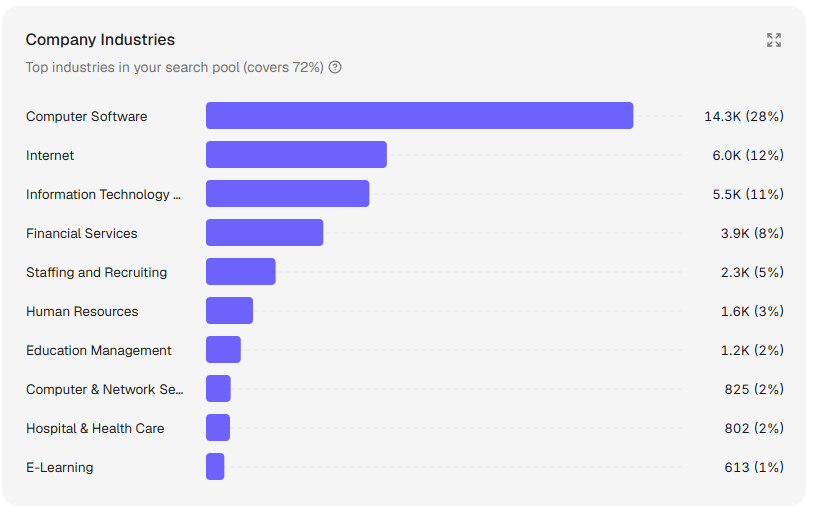 Software dominates the market, accounting for 28% of employers, followed by Internet businesses, Information Technology and Financial Services. Together these sectors represent the overwhelming majority of VC-backed employment across Europe.
The data confirms that venture capital investment continues to flow primarily into digitally enabled businesses where scale can be achieved rapidly through technology-led business models.
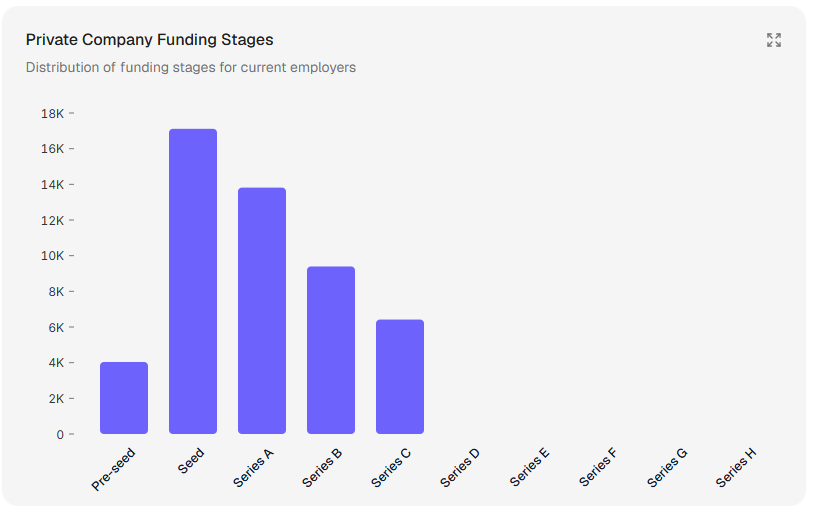 The largest concentration of talent sits within Seed, Series A and Series B companies. This is particularly important because these organisations are often in rapid-growth mode, creating significant hiring demand while simultaneously supplying experienced professionals to the wider market.
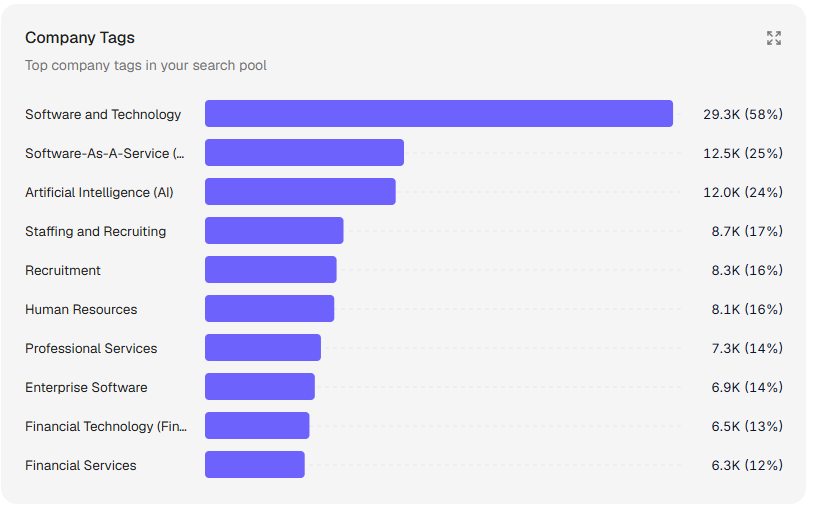 Company tags further highlight the dominance of Software & Technology (58%), SaaS (25%) and Artificial Intelligence (24%). AI’s prominence confirms that demand for technical, product and data-related talent is likely to remain exceptionally strong across Europe
Gender Diversity
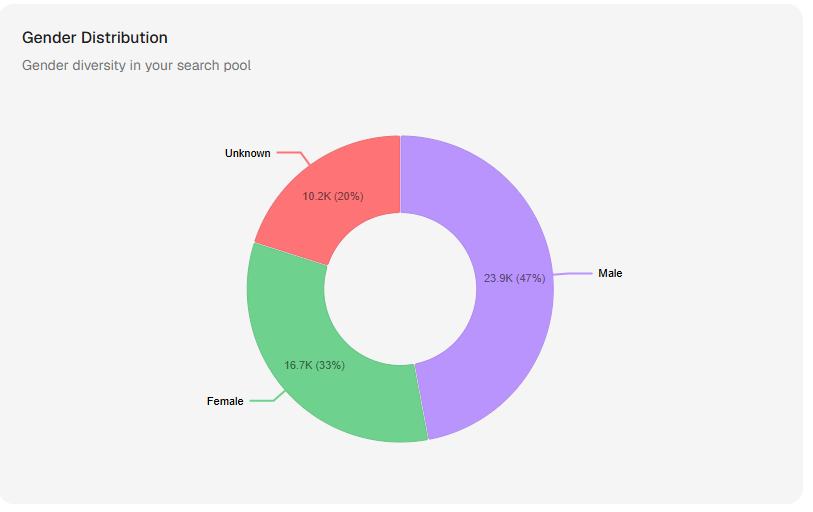 The workforce is comprised of 47% male and 33% female professionals, with 20% not classified. While female representation is materially stronger than some traditional technology sectors, there remains considerable opportunity for improvement, particularly in technical and leadership positions.
For employers focused on diversity hiring, broadening search strategies beyond traditional startup networks and targeting adjacent industries may help increase access to underrepresented talent pools.
Education
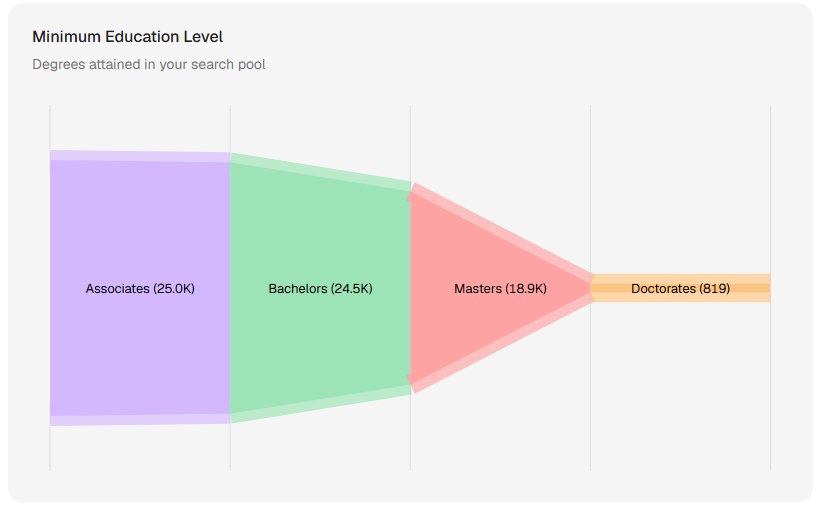 The educational profile is strong but diverse. Bachelor’s and Master’s degrees dominate the market, while doctorate-level qualifications represent a relatively small proportion of the workforce. This reflects the commercial and operational nature of startup hiring, where practical execution experience is often valued alongside academic achievement.
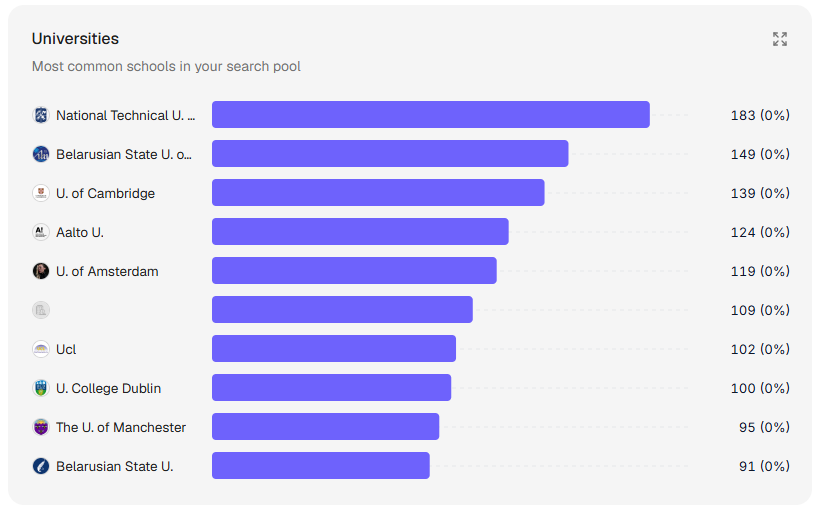 Institutions such as Cambridge, University College Dublin, University of Manchester, Aalto University and the University of Amsterdam appear among the most common educational backgrounds, demonstrating the pan-European nature of the talent pool.
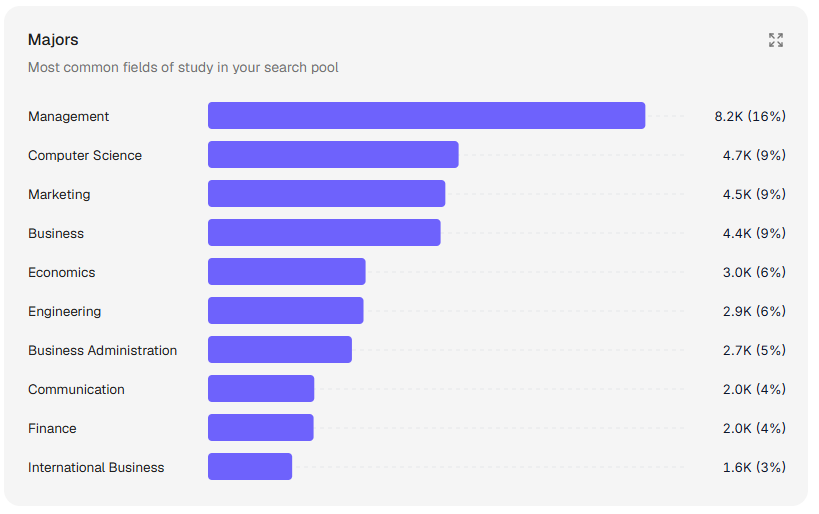 Management is the most common academic discipline, followed by Computer Science, Marketing, Business and Economics. This blend reflects the balance between technical capability and commercial execution required to scale venture-backed organisations.
The prominence of Computer Science confirms the strong technical foundation underpinning Europe’s VC ecosystem, while management and business disciplines highlight the increasing operational maturity of growth-stage organisations.
Languages
English is the dominant language, appearing in 52% of profiles. Spanish and French each appear in 18% of profiles, with German represented in 15%. Russian, Italian, Portuguese and Dutch also feature prominently. This demonstrates that Europe offers one of the world’s most multilingual talent markets. While English remains the primary business language, many professionals possess multiple language capabilities that can support international expansion, customer success operations and regional market growth. For employers hiring across EMEA, multilingual capability is not confined to specialist language markets. It is widely embedded throughout the venture-backed workforce.Key Insights
Europe’s VC-backed workforce is significantly more mature than many employers may expect. With professionals averaging almost thirteen years of experience and a strong concentration of talent in the seven to twelve year range, the market is dominated by experienced operators capable of scaling businesses through growth and transformation. While London, Paris and Berlin remain the largest talent hubs, the continued growth of cities such as Warsaw, Madrid and Barcelona presents organisations with viable alternatives for accessing highly skilled talent while managing hiring costs and competition. The data also highlights that Europe’s startup ecosystem is not isolated from the wider labour market. Many professionals working in VC-backed organisations have previously built their careers within global consultancies, technology services firms and enterprise software companies. Employers struggling to hire directly from competitors should therefore consider adjacent talent pools where transferable skills, leadership capability and growth experience are readily available. Perhaps the most important recruitment takeaway is that technical and multilingual talent remain the defining characteristics of Europe’s startup workforce. Engineering is by far the largest functional area, Software and AI dominate the company landscape, and English is firmly established as the common business language. Organisations that broaden their searches across multiple European locations, target adjacent industries and embrace distributed hiring strategies will have a significant advantage in securing the talent needed to support future growth.Frequently Asked Questions
Which city has the largest VC backed talent pool in Europe?London leads the market, followed by Paris and Berlin
The average professional has 12.8 years of experience, indicating a highly mature talent market.
The average tenure is 2.7 years, with a median of 2.1 years.
By targeting adjacent industries, recruiting from alternative European hubs and considering multilingual professionals outside traditional startup centres.
Software, Internet, IT and Financial Services account for the largest concentration of talent.
Yes. AI is one of the most prominent company tags, appearing in nearly a quarter of the market.
Yes. English is the dominant language, appearing in over half of all profiles.
Management, Computer Science, Marketing and Business-related subjects dominate.


